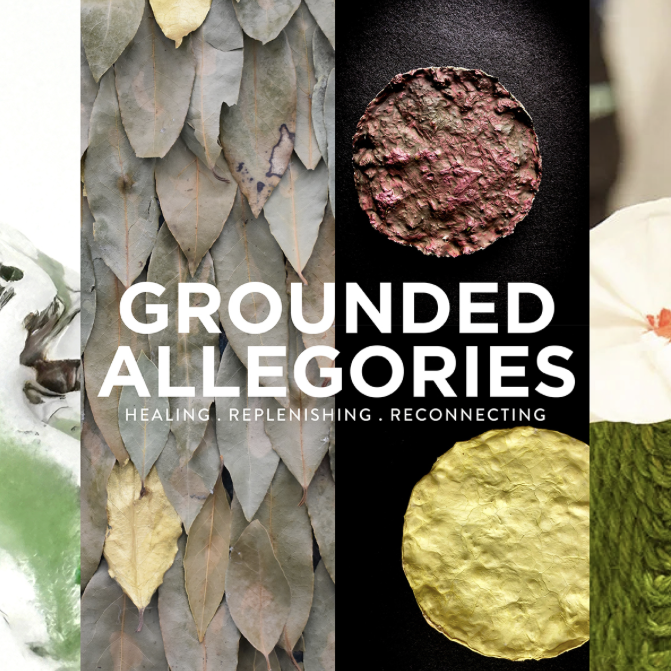
Grounded Allegories Exhibition
Download the catalogue >>
Melbourne Design Week listing >
Art Thoughts blog >
Balam Balam post >
Swinburne post >
The Grounded Allegories exhibition and panel discussion aimed to inspire dialogue about design’s responsibility in shaping resilient futures. Through the works, the exhibition asked: How might design mend relationships between humans and nature? What materials, systems and narratives could replenish what has been depleted in our society?
Balam Balam Place hosted works by Anna Caione, Jane Connory, Joanna Gardener and John Sadar during Melbourne Design Week and the exhibition envisioned futures where human and ecological wellbeing coexist in balance. Encompassing objects and images, the exhibition showcased how research through design can embody empathy, resilience and respect for humanity and the living planet.
An interactive installation explored the care we grant one another, engaging with period pride and poverty. Two three-dimensional works explored the poetic potential of natural materials, from trees and branches to the mycelial network that connects them. And an image-based work probed the inner world of ephemeral ice sculptures as they melt.
During the opening event and panel discussion, each artist/design presented their work and the architects of Balam Balam talked about the design of the building in line with the theme of Grounded Allegories.
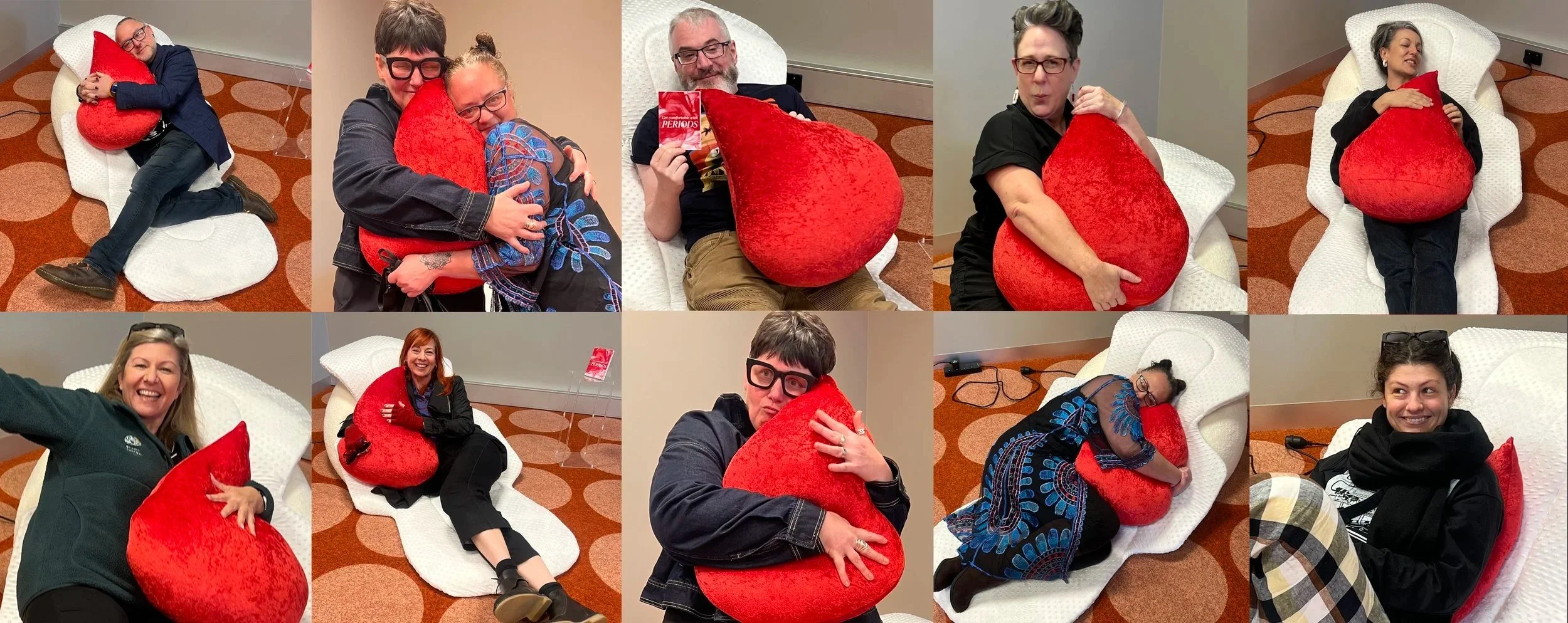
Audience members could interact with Jane Connory’s ‘Get Comfortable with Periods’ soft sculpture.
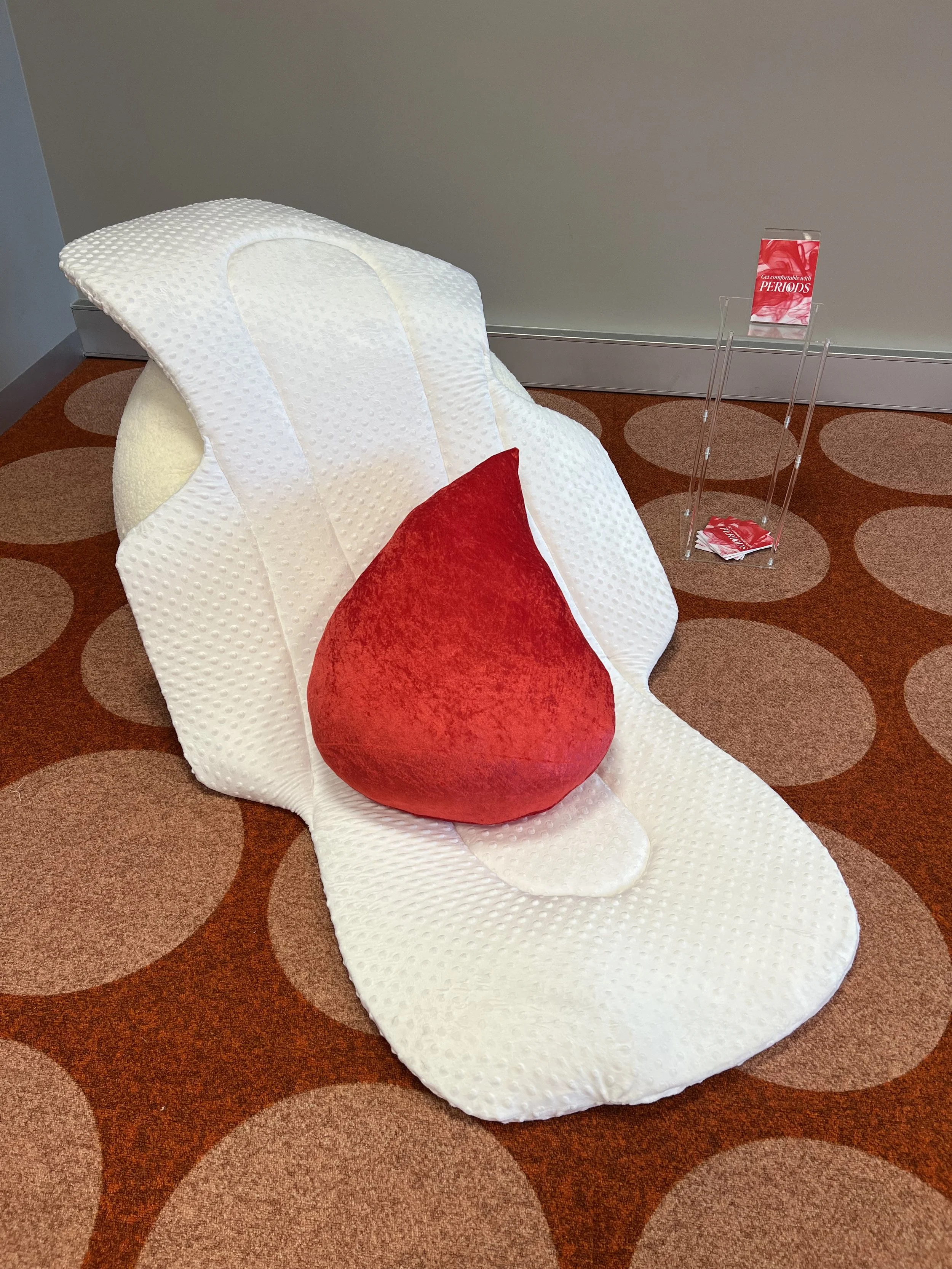
‘Get Comfortable with Periods’ .
Get Comfortable with Periods by Jane Connory was an interactive installation that invited the audiences to confront and reframe deeply embedded discomforts surrounding menstruation. Centred around a large-scale sculptural bean bag resembling a menstrual pad, accompanied by a soft blood clot cushion, the work encouraged viewers to sit, rest, and quite literally get comfortable within a space typically marked by shame, silence and stigma.
As participants engaged with the piece, they were invited to read a zine presenting research, statistics and lived experiences relating to period poverty, social taboo, and the marginalisation of menstruation — particularly for gender-diverse communities. This research was developed in collaboration with the charity Share the Dignity, grounding the work in advocacy and real-world impact.
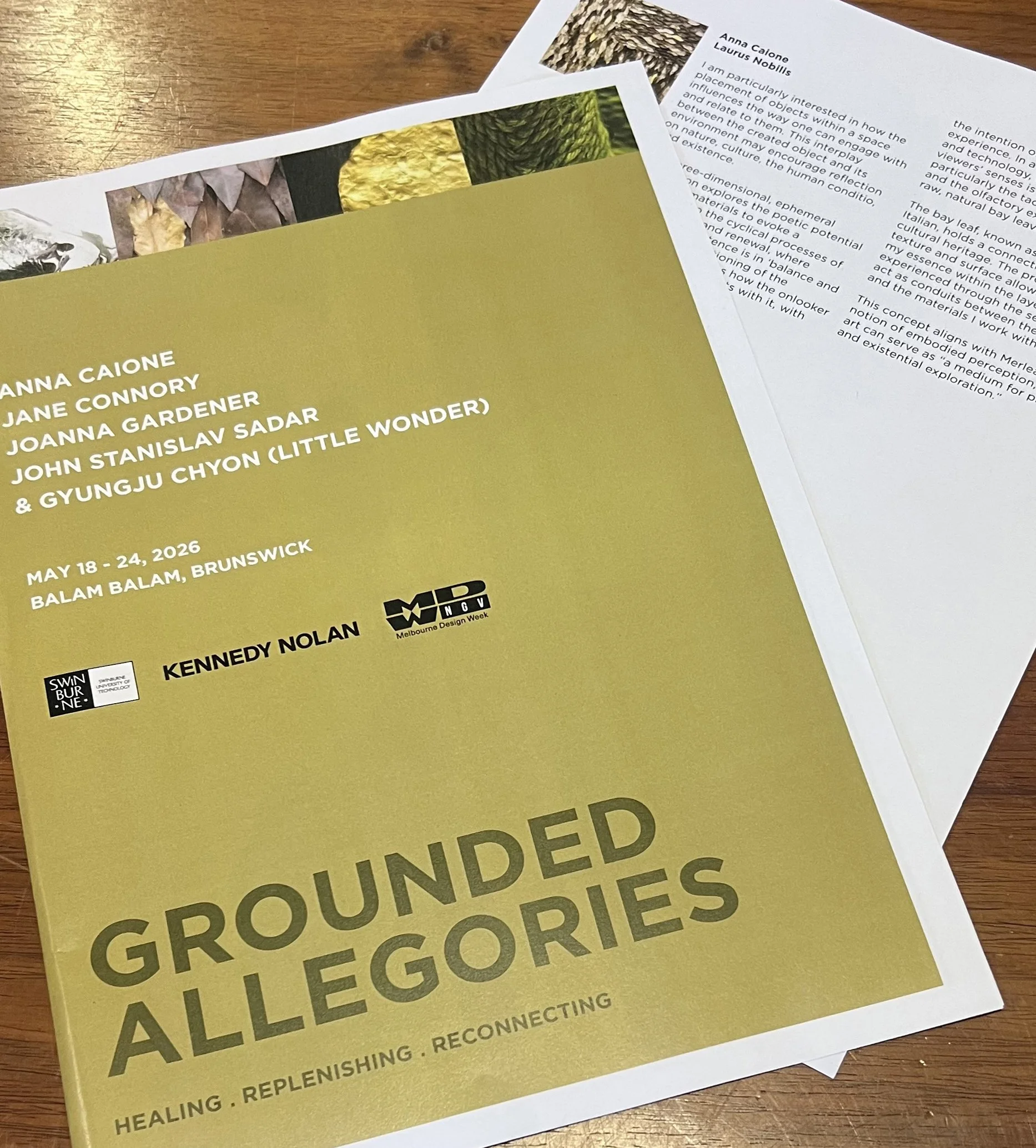
Catalogue containing an essay co-written by all four designers.
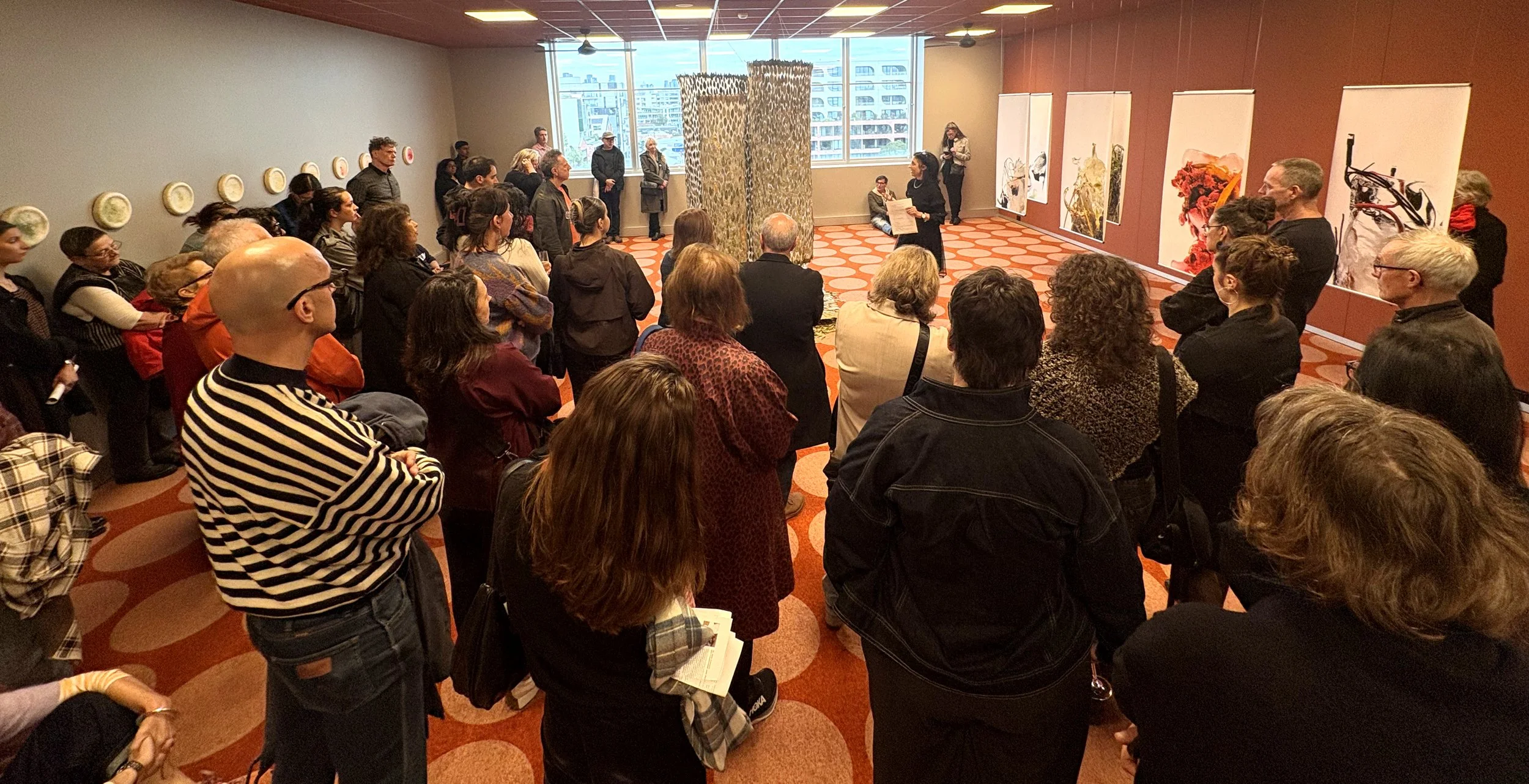
Over 150 people attended the opening event for ‘Grounded Allegories’ at Balam Balam Place in Brunswick.
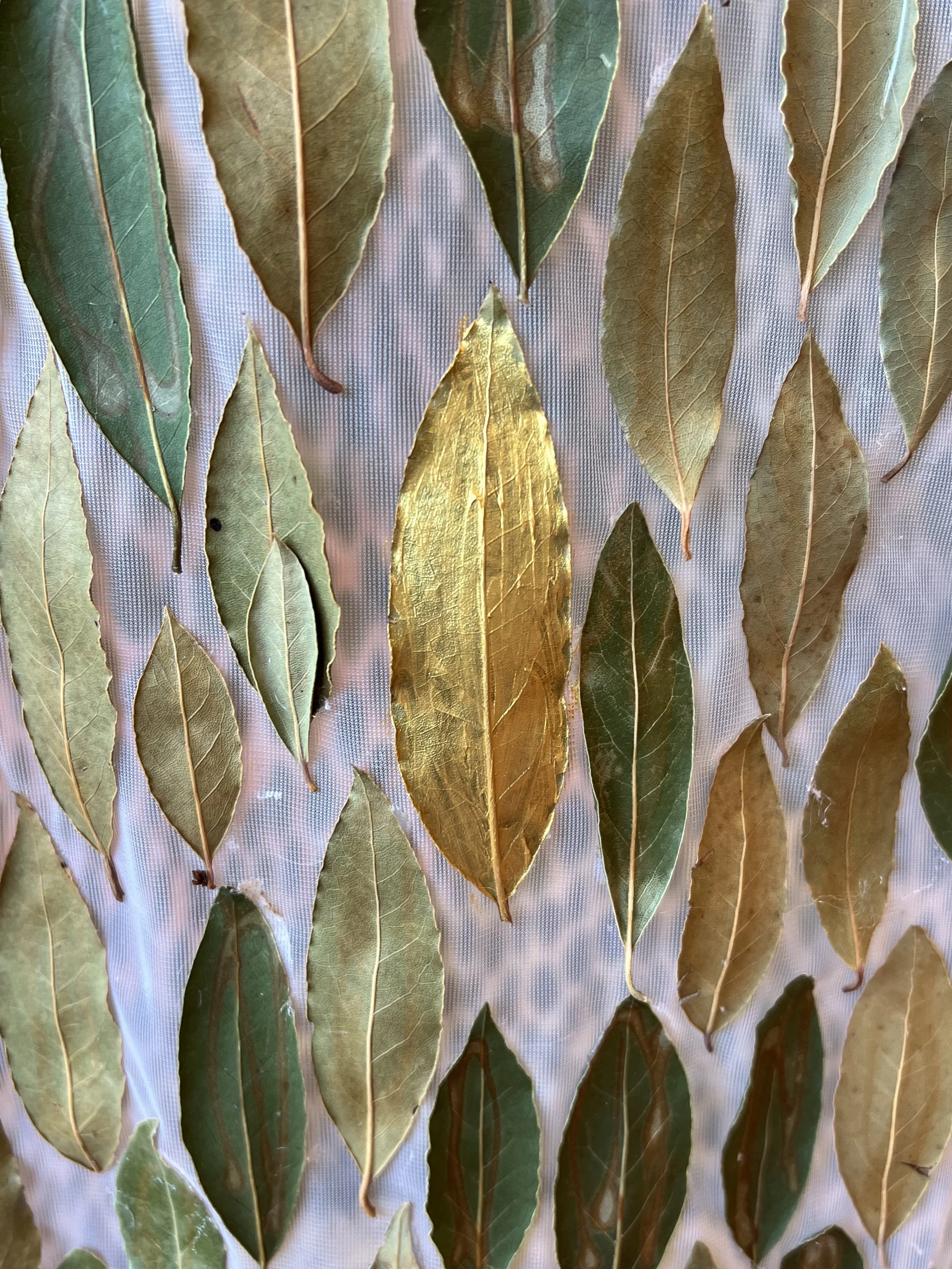
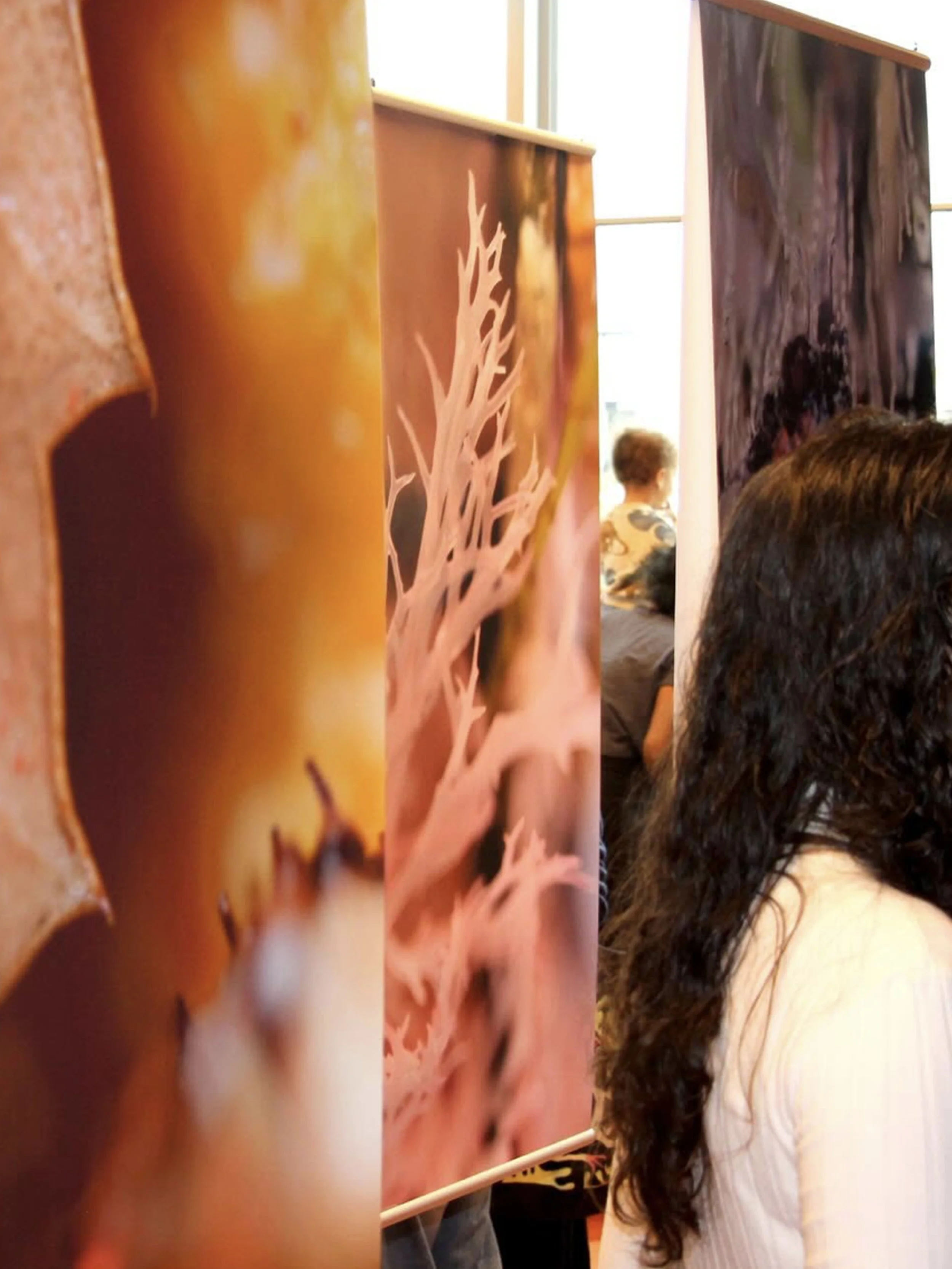
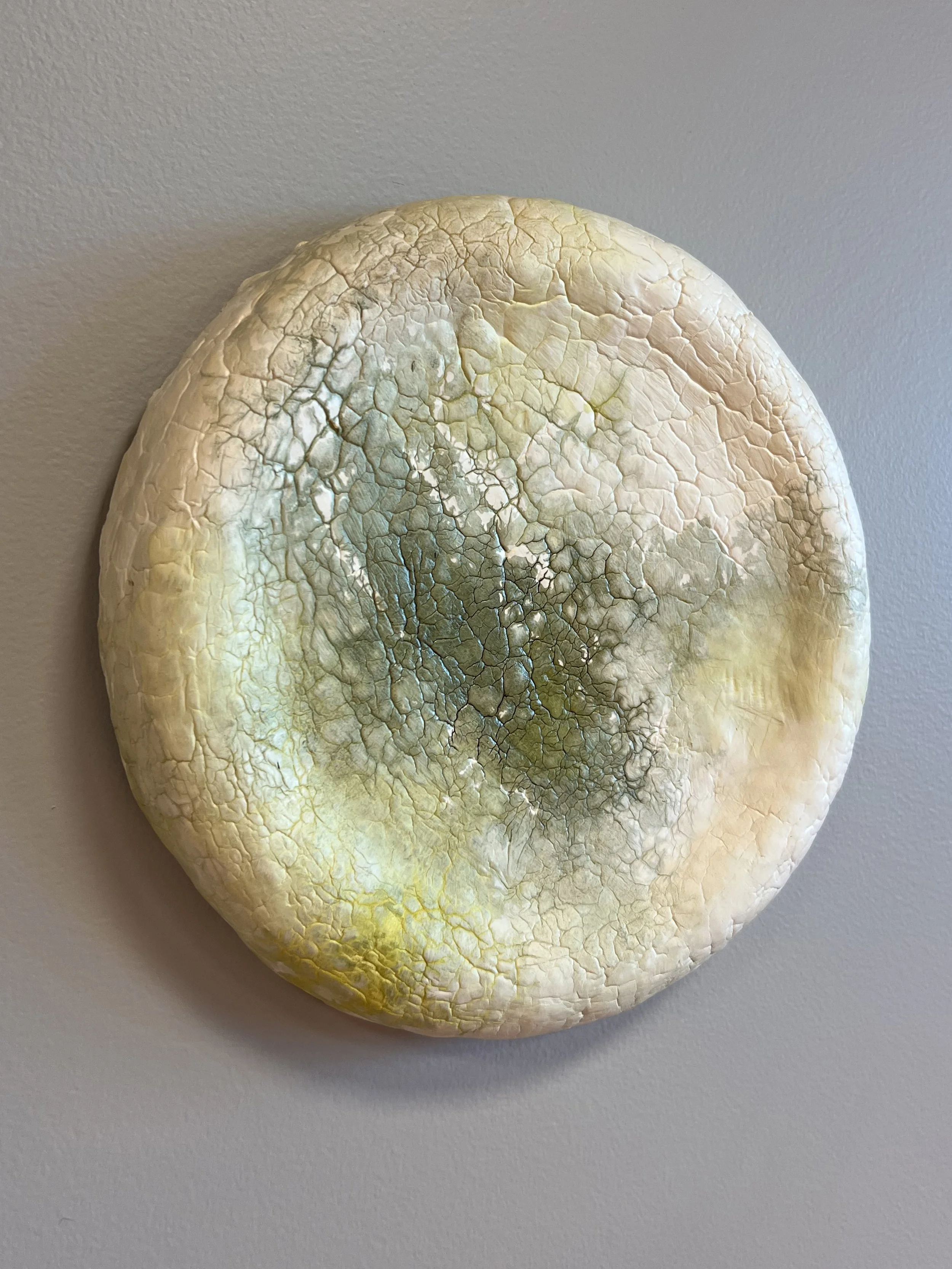
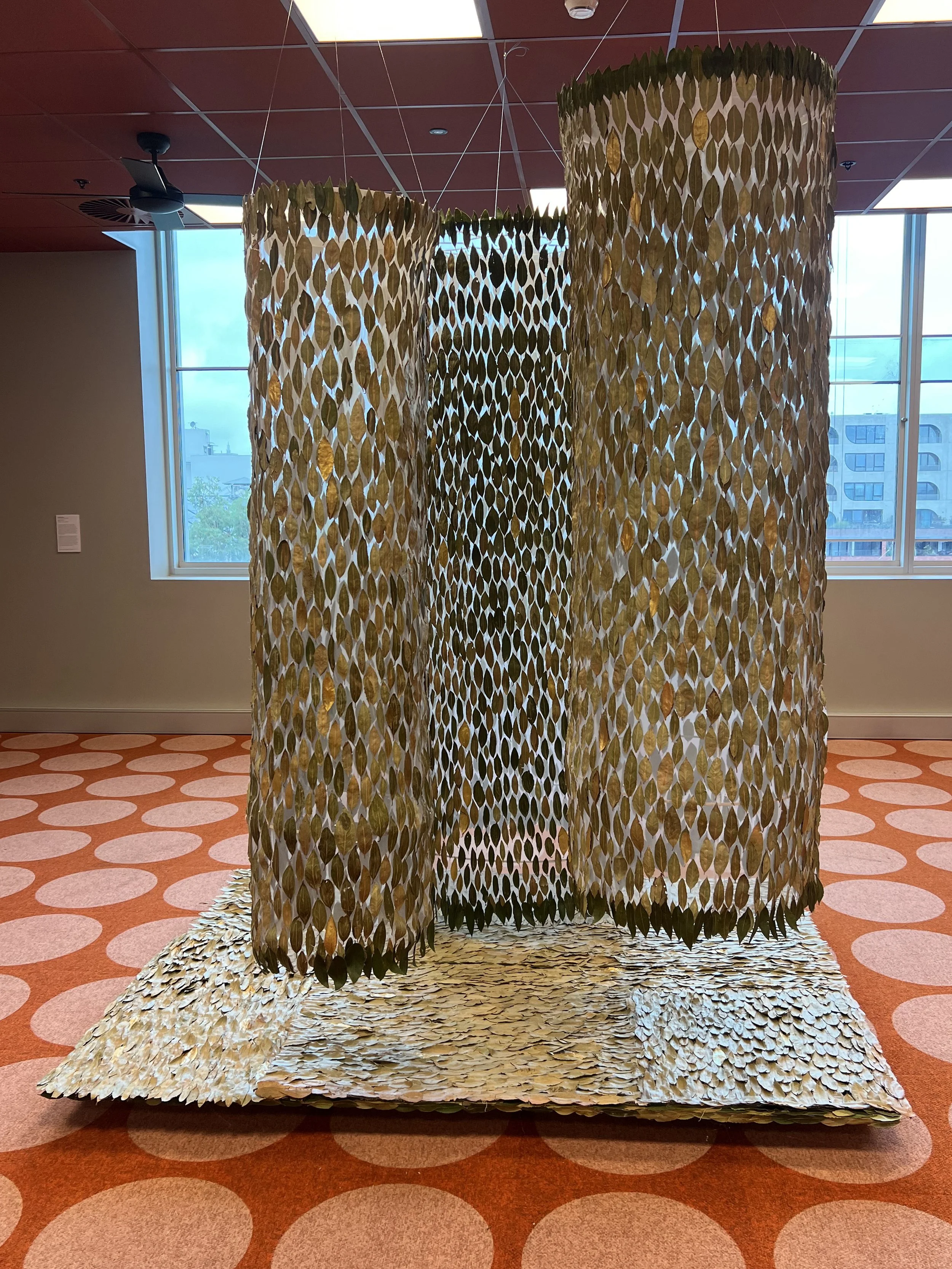
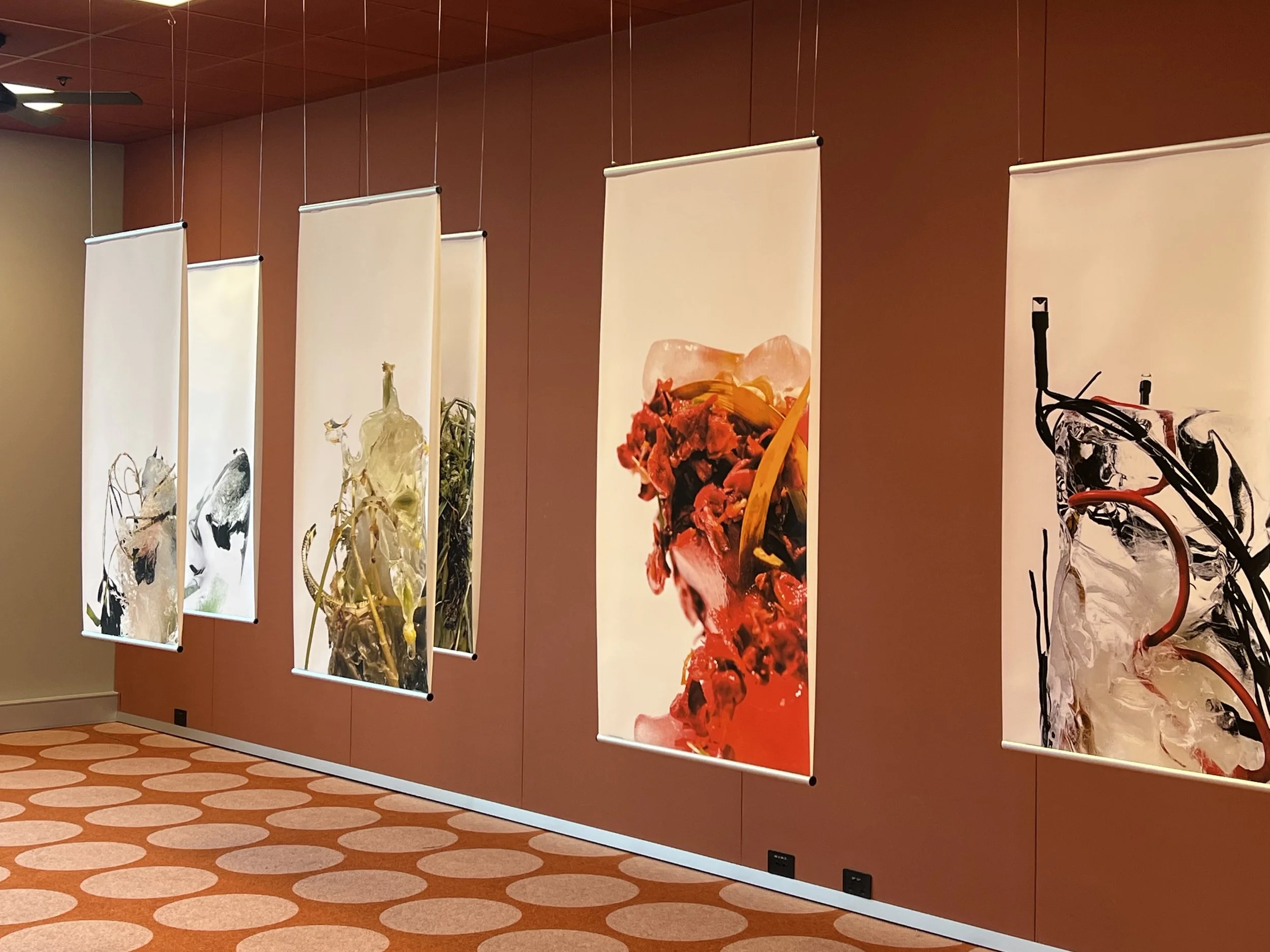
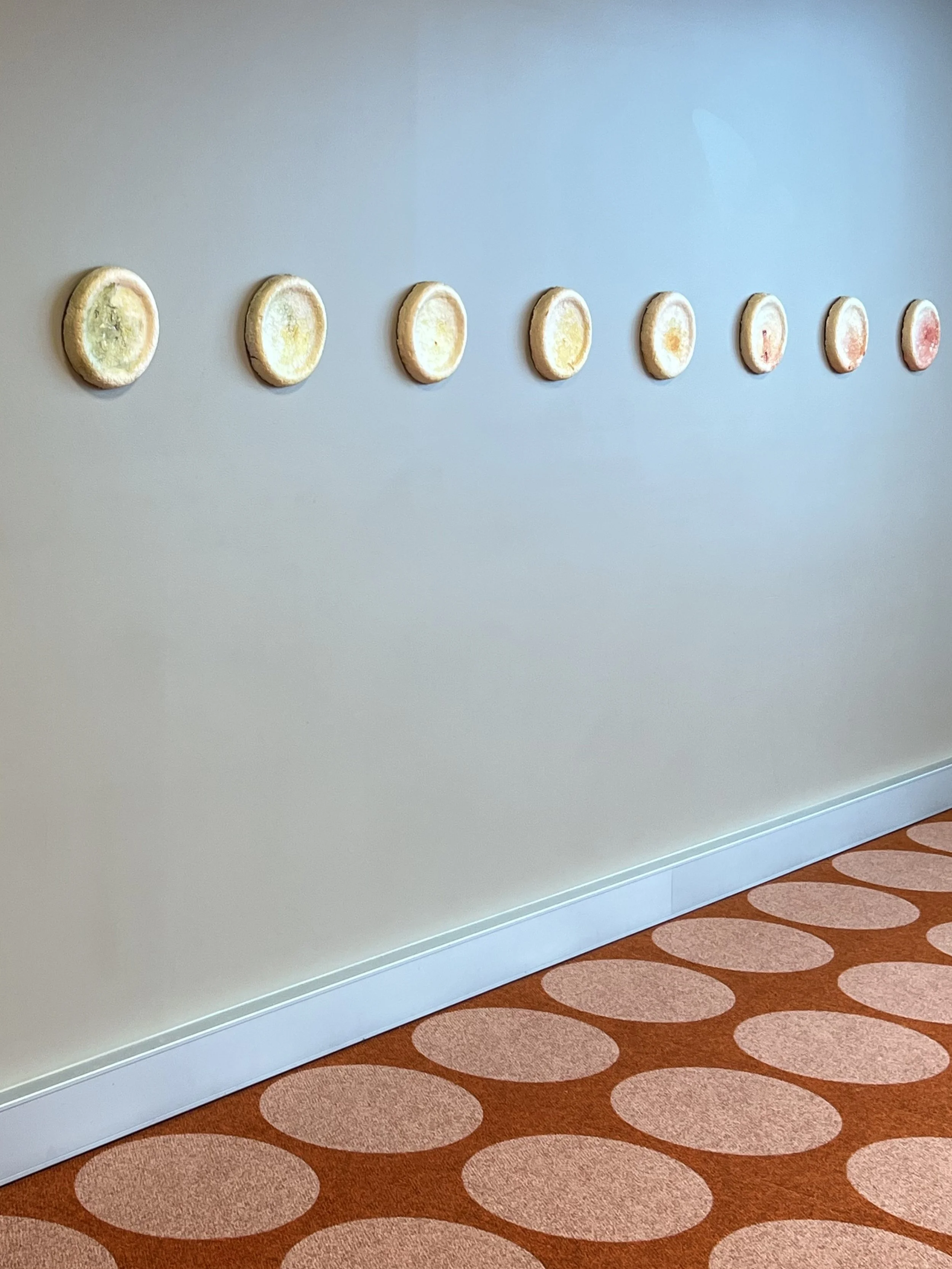
Anna Caione’s Laurus Nobilis (left column above)
This three-dimensional, ephemeral installation explores the poetic potential of natural materials to evoke a connection to the cyclical processes of growth, decay and renewal, where ecological coexistence is in ‘balance and harmony’.
Dr Joanna Gardener’s Becoming Place (middle column above)
Gardener uses creative practice as a method of inquiry. Her works often begin with walking, observation, and the collection of fragments, traces of encounters and moments that might otherwise go unnoticed. These are translated into sculptural photographs that foreground the intimate, lived experience of place.
Gyungju Chyon and Dr John Stanislav Sadar’s Roy G (right column above)
Roy G. charts the annual cycle of decay and renewal in tinted mycelium. Ten biconcave discs are linearly arranged in a quiet spectrum from crimson red to amber orange, yellow ochre and forest green. The palette mirrors the seasonal transition of foliage, but the medium speaks to deeper networks.